
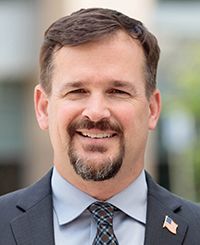
Anthony R. Artino Jr, PhD is a tenured Professor of Health, Human Function, and Rehabilitation Sciences and of Medicine at the George Washington University (GW) School of Medicine and Health Sciences (SMHS) in Washington, DC. In previous leadership roles, he served as Associate Dean for Educational Research at GW SMHS. Before joining GW, he was Professor of Medicine, Deputy Director, and co-founder of the Center for Health Professions Education at the Uniformed Services University. He also spent more than 23 years as an officer in the U.S. Navy Medical Service Corps, retiring at the rank of Captain (O-6) in 2020.
Dr. Artino is an educational researcher whose scholarship focuses on survey methodology, measurement and evaluation, academic motivation and self-regulated learning, and medical and health professions education. He has served as principal or associate investigator on several extramurally funded research projects, and his most highly cited work includes research and educational scholarship on survey design and analysis, self-regulated learning, and long-term physician outcomes. Dr. Artino is Deputy Editor for the Journal of Graduate Medical Education and serves on the editorial review board for Academic Medicine. He is a Fellow of the American Educational Research Association, the International Association for Health Professions Education (AMEE), and the Aerospace Medical Association. He has published extensively and presented around the world on topics ranging from survey methodology, teaching, learning, and assessment to scholarly dissemination and the responsible conduct of research.
Research
As primarily a quantitative researcher, Dr. Artino has served as principal, associate, or collaborating investigator on funded research projects totaling more than $5.37 million. As a scholar in medical and health professions education, he has published more than 300 peer-reviewed journal articles and book chapters and has edited a textbook on survey design. His most highly cited scholarship addresses topics including the analysis and interpretation of Likert-type data, academic motivation and self-regulated learning among medical students and practicing physicians, long-term physician outcomes, and the development of questionnaires for educational research.
Dr. Artino has also given research presentations and workshops at national and international meetings, including annual meetings of the Association of American Medical Colleges, Accreditation Council for Graduate Medical Education, International Association for Health Professions Education (AMEE), American Educational Research Association, and Association of Program Directors in Internal Medicine, among many others. Taken together, he has conducted more than 350 invited talks, research presentations, and conference workshops on teaching, learning, assessment, educational research, and scholarship for faculty and students around the globe.
Dr. Artino’s research has been guided by two interrelated goals: advancing scientific understanding of teaching, learning, and assessment processes and translating that knowledge into practical approaches for improving medical and health professions education. His work is grounded in the principle that theory, research, and educational practice should operate in synergy, with each informing and strengthening the others. Within this program of research, he has used social-cognitive perspectives on motivation, emotion, and behavior to better understand how medical trainees learn across the educational continuum.
A second major line of inquiry has focused on long-term physician outcomes. From 2009 to 2020, Dr. Artino co-directed the Long-Term Career Outcome Study (LTCOS) at the Uniformed Services University of the Health Sciences. The LTCOS collected and analyzed quantitative and qualitative data before, during, and after medical school to help university leaders evaluate graduate outcomes and educational programs. The multidisciplinary LTCOS team presented dozens of research abstracts at scientific conferences and published more than 60 peer-reviewed journal articles.
Dr. Artino also contributes methodological expertise in measurement and evaluation, with particular emphasis on improving the quality of survey-based research. Surveys are widely used in medical and health professions education, yet methodological weaknesses in survey design remain common. To address this problem, Dr. Artino has edited a survey-design textbook and published several widely cited articles that synthesize evidence-informed approaches into a systematic survey-design process. He has also introduced these methods to graduate medical educators through a series of articles in the Journal of Graduate Medical Education and has delivered more than 100 invited talks and conference workshops on survey design.
Teaching
Dr. Artino teaches graduate courses in the Doctorate of Health Sciences (DHSc) Leadership in Clinical Practice and Education program at SMHS. Since 2008, he has taught numerous online and face-to-face courses and developed graduate-level course materials and curricula. In addition to his teaching at GW SMHS and the Uniformed Services University, he has taught graduate courses for the University of Connecticut, the University of Cincinnati, and the University of Illinois Chicago.
Dr. Artino also facilitates workshops for students and faculty, supervises junior faculty, and has mentored more than 45 graduate students as a research advisor, thesis or dissertation committee member, and academic counselor. His experience as an educator also includes more than two decades as a U.S. Navy instructor.
Beyond his home institutions, Dr. Artino has made substantial teaching contributions nationally and internationally, including more than 160 invited workshops at academic institutions such as Harvard Medical School, Dartmouth-Hitchcock Medical Center, Columbia University Vagelos College of Physicians and Surgeons, the University of British Columbia, Virginia Tech Carilion School of Medicine, and the University of Washington.
Community Service
Dr. Artino has served the medical and health professions education community in numerous national and international leadership and service roles. He currently serves on the Fellowship Committee of the International Association for Health Professions Education (AMEE) and the Steering Committee of the Academies Collaborative. He has also held leadership roles in major professional organizations, including the Association of American Medical Colleges, American Educational Research Association, Aerospace Medical Association, American Psychological Association, and AMEE.
Among his previous national service roles, Dr. Artino served as chair of the Research in Medical Education Program Planning Committee for the Association of American Medical Colleges and as co-chair of the Program Planning Committee for Division I of the American Educational Research Association. As a former member of AMEE’s Research Committee, he was one of a small group of international members responsible for helping lead research initiatives for the organization. He is a Fellow of the American Educational Research Association, AMEE, and the Aerospace Medical Association.
Dr. Artino is Deputy Editor for the Journal of Graduate Medical Education and serves on the editorial review board for Academic Medicine. Over the past decade, he has also served in editorial roles for several other journals, including Perspectives on Medical Education, Military Medicine, Military Psychology, The Internet and Higher Education, and the Journal of Advanced Academics.
- Artino, A. R., Zaidi, Z., Izzi, F., Samanani, S., Sampathkumar, N., & Pajoohesh-Ganji, A., (2026). Building and sustaining scholarly communities in health professions education: Lessons from U.S. academies. Perspectives on Medical Education, 15(1), 675-686.
- Artino, A. R., & Iacono, C. (2026). Disclosure is necessary; Intellectual ownership is essential: Artificial intelligence and scholarly writing. Journal of Graduate Medical Education,18(3), 239-242.
- Artino, A. R., & Maggio, L. A. (2026). When the math does not add up: Rethinking the small-grant economy in medical education. Academic Medicine, 101(8), 924-930.
- Artino, A. R., Roche, C., & Zaidi, Z. (2026). From publication to dissemination: Using social media to extend scholarly reach and impact. Academic Medicine, 101(8), 910-916.
- Artino, A. R., Chen, H. C., Santen, S. A., Simons, R. J., Christner, J. G., & Teherani, A. (2026). Overreliance on student satisfaction surveys in medical education: A call for reform in evaluation and accreditation practices. Academic Medicine, 101(1), 12-18.
- Sullivan, G. M., Simpson, D., Yarris, L. M., Deiorio, N. M., & Artino, A. R. (2025). Rip Out: Less angst and more fun: Writing strategies and writing groups for scholarship. Journal of Graduate Medical Education, 17(5), 655-656.
- Rao, A. S., & Artino, A. R. (2025). AI-driven OSCE preparation in medical education: Promise, pitfalls, and practical implications. New England Journal of Medicine Artificial Intelligence, 2(8). Advance online publication. doi: 10.1056/AIe2500527
- Rodman, A., Mark, N. M., Artino, A. R., & Lessing, J. N. (2025). AM Last Page: Using generative artificial intelligence in medical education. Academic Medicine, 100(2), 250.
- Artino, A. R., Fletcher, K., Arora, V., & Zabar, S. (2024). Rip Out: Writing a medical education grant budget. Journal of Graduate Medical Education, 16(5), 617-618.
- Bynum, W. E., Dong, T., Uijtdehaage, S., Belz, F., & Artino, A. R. (2024). Development and initial validation of a shame frequency scale in medical students. Academic Medicine, 99(7), 756-763.
- Johnson, W. R., Durning, S. J., & Artino, A. R. (2024). The dynamics of self-monitoring in medicine: Safety, efficiency, and clinical implications. Medical Education, 58(5), 488-490.
- Hill, J., Ogle, K., Gottlieb, M., Santen, S., & Artino, A. R. (2024). Best practices for reporting survey-based research. Academic Emergency Medicine Education and Training, 8(1), e10929, doi: 10.1002/aet2.10929
- Chen, H. C., Brown, K., Hernandez, Y. M., Martin, L., Witkop, C. T., Aintablian, A., Prince, A., Artino, A. R., Kind, T., & Maggio, L. A. (2023). Faculty and student perceptions of unauthorized collaborations in the preclinical curriculum: Student or system failure? Academic Medicine, 98(11S), S42-S49.
- Ogle, K., Gottlieb, M., Hill, J., M., Santen, S., & Artino, A. R. (2023). Educator’s blueprint: A how-to guide on survey administration. Academic Emergency Medicine Education and Training, 7(5), e10906, doi: 10.1002/aet2.10906
- Johnson, W. R., Artino, A. R., & Durning, S. J. (2023). Using the think aloud in health professions education: An interview method for exploring thought processes: AMEE Guide No. 151. Medical Teacher, 45(9), 937-948. Article also published as an AMEE Guide and listed below under Books, Book Chapters, Guides, & Encyclopedia Entries.
- Maggio, L. A., Costello, J. A., Ninkov, A., Frank, J. R., & Artino, A. R. (2023). Expanding interdisciplinarity: A bibliometric study of medical education using the MEJ-24. Perspectives on Medical Education, 12(1), 327–337.
- Nasser, J. S., Artino, A. R., Kind, T., Duan, X., Mihalic, A., & Chretien, K. (2023). Matching into competitive surgical residencies: Predictors of success. Medical Education Online, 28(1), 2189558. doi: 10.1080/10872981.2023.2189558
- Artino, A. R., Malloy, K., Miller, R. S., Kirk, L. M., & Brigham, T. P. (2023). A redesign of the ACGME Resident/Fellow Survey through expert reviews and cognitive interviews. Journal of Graduate Medical Education, 15(1), 67-73.
- Johnson, W. R., Durning, S. J., Barelski, A. M., Allard, R. J., & Artino, A. R. (2023). A scoping review of self-monitoring in graduate medical education. Medical Education, 57(9), 795-806.
- Artino, A. R., Iqbal, M. Z., & Crandall, S. J. (2023). AM Last Page: Debunking the learning-styles hypothesis in medical education. Academic Medicine, 98(2), 289.
- Maggio, L. A., Costello, J. A., Ninkov, A., Frank, J. R., & Artino, A. R. (2023). The voices of medical education scholarship: Describing the published landscape. Medical Education, 57(3), 280-289.
- Gottlieb, M., Ogle, K., Hill, J., M., Santen, S., & Artino, A. R. (2022). Educator’s blueprint: A how-to guide for collecting validity evidence in survey-based research. Academic Emergency Medicine Education and Training, 6(6), e10835. doi: 10.1002/aet2.10835
- Hill, J., Ogle, K., Santen, S. A., Gottlieb, M., & Artino, A. R. (2022). Educator’s blueprint: A how-to guide for survey design. Academic Emergency Medicine Education and Training, 6(4), e10796. doi: 10.1002/aet2.10796
- Artino, A. R., Youmans, Q. R., & Tuck, M. G. (2022). Getting the most out of surveys: Optimizing respondent motivation. Journal of Graduate Medical Education, 14(6), 629-633.
- Park, Y. S., Konge, L., & Artino, A. R. (2020). Positivism paradigm of research. Academic Medicine, 95(5), 690-694.
- Konopasky, A., Ramani, D., Ohmer, M., Battista, A., Artino, A. R., McBee, E., Ratcliffe, T. A., & Durning, S. J. (2020). It totally possibly could be: How a group of military physicians reflect on their clinical reasoning in the presence of contextual factors. Military Medicine, 185(S1), 575-582.
- Barker, A. M., La Rochelle, J. S., Artino, A. R., Wiltz, S. A., Kim, L. M., & Battistone, M. J. (2020). SimLEARN musculoskeletal training for VHA primary care providers and health professions educators. Federal Practitioner, 37(1), 42-47.
- Maggio, L. A., Leroux, T., & Artino, A. R. (2019). To tweet or not to tweet, that is the question: A randomized trial of Twitter effects in medical education. PLoS ONE, 14(10), e0223992. doi: 10.1371/journal.pone.0223992
- Maggio, L. A., Artino, A. R., Watling, C. J., Driessen, E. W., & O’Brien, B. C. (2019). Exploring researchers’ perspectives on authorship decision-making. Medical Education, 53, 1253-1262.
- Konopasky, A., Ramani, D., Ohmer, M., Durning S. J., Artino, A. R., & Battista, A. (2019). Why health professions education needs functional linguistics: The power of “stealth words.” Medical Education, 53, 1187-1195.
- Solhjoo, S., Haigney, M. C., McBee, E., van Merrienboer, J. J. G., Schuwirth, L. W. T., Artino, A. R., Battista, A., Ratcliffe, T. A., Lee, H. D., & Durning, S. J. (2019). Heart rate and heart rate variability correlate with medical reasoning performance and self-reported measures of cognitive load. Scientific Reports, 9(1), 14668. doi: 10.1038/ s41598-019-50280-3
- Cleary, T. J., Konopasky, A., La Rochelle, J. S., Neubauer, B. E., Durning, S. J., & Artino, A. R. (2019). First-year medical students’ calibration bias and accuracy across clinical reasoning activities. Advances in Health Sciences Education, 24, 767-781.
- McBee, E., Blum, C., Ratcliffe, T. A., Schuwirth L. W. T., Polston, E., Artino, A. R., & Durning, S. J. (2019). Use of clinical reasoning tasks by medical students. Diagnosis, 6, 127-135.
- Bynum, W. E., Adams, A. V., Edelman, C. E., Uijtdehaage, S., Artino, A. R., & Fox, J. W. (2019). Addressing the elephant in the room: A shame resilience seminar for medical students. Academic Medicine, 94, 1132-1136.
- Daniel, M., Rencic, J., Durning, S. J., Holmboe, E., Santen, S. A., Lang, V. J., Ratcliffe, T. A., Gordon, D., Heist, B., Lubarsky, S., Estrada, C., Ballard, T., Artino, A. R., Da Silva, A. S., Cleary, T. J., Stojan, J., & Gruppen, L. D. (2019). A scoping review of clinical reasoning assessment tools: Providing practical guidance on the validity and feasibility of different methods. Academic Medicine, 94, 902-912.
- Maggio, L. A., Dong, T., Driessen, E. W., & Artino, A. R. (2019). Factors associated with scientific misconduct and questionable research practices in health professions education. Perspectives on Medical Education, 8, 74-82.
- Cook, D. A., Gas, B. L., Farley, D. R., Lineberry, M., Naik, N. D., Lara, F. J. C., & Artino, A. R. (2019). Influencing ability mindset in procedural skills learning: Two randomized studies. Journal of Surgery Education, 76, 652-663.
- Artino, A. R., Driessen, E. W., & Maggio, L.A. (2019). Ethical shades of gray: International frequency of scientific misconduct and questionable research practices in health professions education. Academic Medicine, 94, 76-84.
- Bynum, W. E., Artino, A. R., Uijtdehaage, S., Webb, A. M., & Varpio, L. (2018). Sentinel emotional events: The triggers, nature, and effects of shame experiences in medical residents. Academic Medicine, 94, 85-93.
- Maggio, L. A., Thomas, A., Chen, H. C., Ioannidis, P. A., Kanter, S. L., Norton, C., Tannery, N. H., & Artino, A. R. (2018). Examining the readiness of Best Evidence in Medical Education Guides for integration into educational practice: A meta-synthesis. Perspectives on Medical Education, 7, 292-301.
- Varpio, L., Bader, K. S., Meyer, H. S., Durning, S. J, Artino, A. R., & Hamwey, M. K. (2018). Interprofessional healthcare teams in the military: A scoping literature review. Military Medicine, 183(11-12), e448-e454.
- Berman, N., & Artino, A. R. (2018). Development and validation of an online engagement metric using virtual patients. BMC Medical Education, 18, 213-220. doi: https://doi.org/10.1186/s12909-018-1322-z
- Cook, D. A., Gas, B. L., & Artino, A. R. (2018). Measuring mindsets and achievement goal motivation: A validation study of three instruments. Academic Medicine, 93, 1391-1399.
- Maggio, L. A., Leroux, T. C., Meyer, H., & Artino, A. R. (2018). #MedEd: Exploring the relationship between altmetrics and traditional measures of dissemination in health professions education. Perspectives on Medical Education, 7, 239-247.
